
LinkedIn is a totally different beast when compared to other social media networks because its algorithm is intentionally designed to prevent content from going viral.
Yes, you read that correctly. The LinkedIn algorithm is designed to prioritise showing users only the most relevant professional advice and expertise. So when it comes to the content your brand produces for LinkedIn, you need to apply a completely different approach. One that focuses primarily on education rather than on entertainment.
This is especially true since recent LinkedIn algorithm updates seem to indicate, among other things, that focusing on sharing your brand’s expert knowledge is more important than ever.
Below we reveal all you need to know and more to work with the LinkedIn algorithm in 2024.
What is the LinkedIn algorithm?
The LinkedIn algorithm is a system that was created to select only the best posts unique to each individual, based on their interests, and display them in the user’s feed.
The algorithm analyses billions of posts per day with the aim of making everyone’s newsfeed as interesting and informative as possible.
LinkedIn’s ultimate goal is to prioritise highly relevant and quality content in an effort to promote engagement and keep users on their platform for as long as possible. The more time users spend on the platform, the more data the algorithm has to analyse and then promote even more highly relevant content.
That being said, LinkedIn is not a platform on which you should expect your brand’s content to go viral. In fact, LinkedIn itself has specifically said that its algorithm is not designed for virality. This was in response to viral spam content that recently violated LinkedIn Professional Community Policies.
As a result, LinkedIn prefers users and brands to share knowledge and updates with people who care about receiving that information and who use it to advance their careers.
How does the LinkedIn algorithm work?
1. LinkedIn decides if your post is spam or quality content
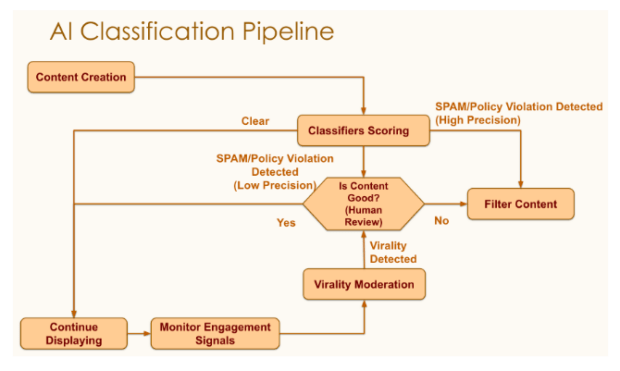
It starts off by using AI (Artificial Intelligence) to determine whether your brand’s post violates any of the platform’s spam guidelines or community policies. If the AI detects any violations, it filters out the content.
Some clear-cut examples of what LinkedIn considers spam include:
- Emoji or reaction polls specifically created to artificially boost engagement
- The spreading of chain letters
- Perpetually asking for likes, reactions, and shares on posts
- Posting excessive, irrelevant or repetitive comments or messages
If the AI is unable to determine what type of content your brand has posted it is sent to a human to be reviewed. If the human decides that your content isn’t spam, it gets pushed to the newsfeed for people to consume.
Below is a visual representation of how LinkedIn’s AI decides what type of content constitutes spam or quality content.
Source: LinkedIn Engineering Blog
2. LinkedIn watches how your posts perform
Once LinkedIn has established that your content is indeed not spam, it watches how it performs. Looking for certain engagement signals to determine how valuable your content is to people in your immediate and extended networks.
Engagement shows that the post you put out has value, but not all engagement is considered equal according to LinkedIn. The algorithm is trained to look specifically for meaningful engagement on your post, i.e. people from relevant fields who post comments that are intelligent and thought-provoking.
3. LinkedIn has ranking signals
Connections
Recent changes in the LinkedIn algorithm make sure that your first-degree connections see most, if not all of your content.
The algorithm also prefers to show content that your business creates to people you are closely associated with, like those you’ve interacted with in your extended network. Your skills and company page location also play a role in who gets shown your content.
Content
LinkedIn’s algorithm is trained to analyse content based on how well it performs when shown to other users on the platform. Some of the signals it relies on include:
- How often the content is viewed and engaged with
- How relevant the topic is
- If the content shares some kind of professional knowledge or advice
- The content’s use of language
- How professional and constructive the comments section is
- Which companies, people, and topics are mentioned in the content
User activity
The algorithm determines user’s interests and what it shows them is based on the groups they belong to, the hashtags they use, the pages they like and the people they follow. It also analyses their interest in a topic based on their actions. For example, writing a post, liking a certain type of content, or commenting on a post that they found interesting.
It then shows them more content similar to the topics they’ve engaged with as well as more posts of the people that they’ve followed and shown an interest in.
LinkedIn algorithm changes
LinkedIn’s new algorithm changes are a result of user feedback and were made to accomplish two main goals:
- Showing more content that shares sensible knowledge and sound advice
- Strengthening connections among people who know each other
So what does this mean from a practical perspective?
Your personal content, particularly your own professional updates, will most likely be seen by people who can be found in your first-degree connections. All branded content, provided it’s knowledgeable and insightful, will be seen by everyone else. LinkedIn will then do the further work of deciding which content will be served to whom based on their interests and skills.